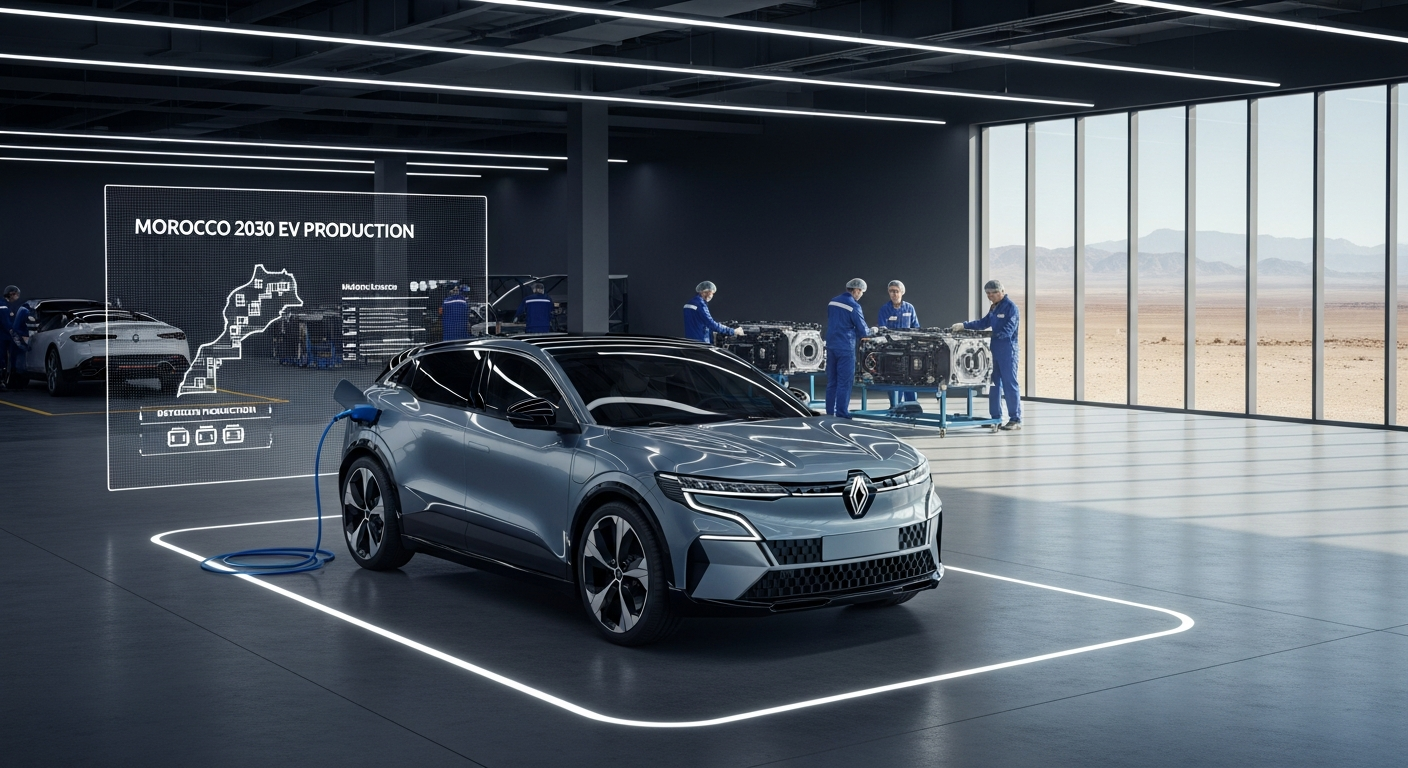
Renault Drives into Morocco’s EV Future with 2030 Production
In a significant move for the automotive industry, Renault is set to begin manufacturing electric vehicles (EVs) in Morocco by 2030. This initiative, as announced by the Moroccan government, is a key part of Renault’s expansion strategy targeting both the local and African markets. The new agreement signed between Renault and the Moroccan authorities signifies a major step in bolstering Morocco’s position as a regional hub for clean car manufacturing.
Expanding Production and Job Creation
Renault, already operating two plants in Tangier and near Casablanca, is poised to launch a new series of EVs manufactured in Morocco by 2030, alongside the renewal of its current models. This expansion is expected to generate approximately 7,500 new job opportunities. In 2024 alone, Renault Morocco produced around 413,000 vehicles, with 90% of them exported to over 68 countries under the ‘Made in Morocco’ label. This underscores Morocco’s growing significance in the global automotive supply chain.
Competitive Landscape and Investment
The automotive sector in Morocco is attracting considerable attention. Renault’s competitor, Stellantis, already has a plant in Kenitra, north of Rabat. Moreover, other companies are making significant investments in the region. These include Gotion High Tech, which announced plans last year to establish a battery production plant in Morocco. Also, BTR, CNGR Advanced Material, and LG Chem are all eyeing the Moroccan market. BTR aims to generate $1 billion in revenue from its factories in the Kingdom. Meanwhile, CNGR Advanced Material announced a new factory development project in 2023, and LG Chem is investing in a lithium iron phosphate (LFP) battery production plant.
Strategic Investment and Regional Hub
The Moroccan Ministry of Industry revealed last year that Renault intends to inject approximately 10 billion Moroccan dirhams (about $1.1 billion) into the automotive sector in Morocco. This investment is set to reinforce the country’s status as a regional center for clean car manufacturing on the African continent. This strategic move by Renault highlights Morocco’s potential as a key player in the evolving global automotive landscape, particularly in the realm of electric vehicles. This development is not only a win for Renault but also a significant boost for the Moroccan economy, fostering job creation and technological advancement.
About the Author




