Gibran’s Enduring Legacy: “Twenty Drawings” Reimagined
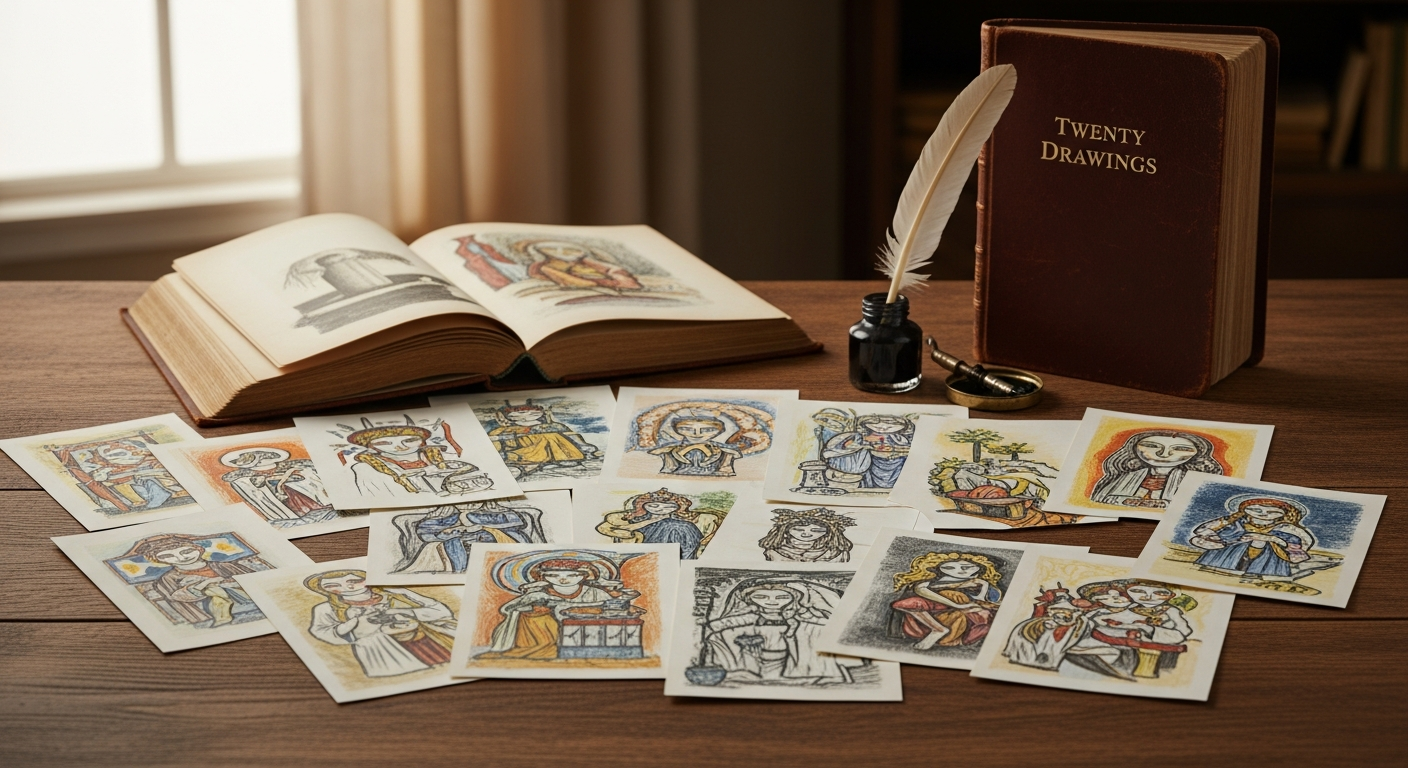
The echoes of Gibran Khalil Gibran continue to resonate, even after his passing in 1931. His works, including his visual art, are constantly revisited, reinterpreted, and celebrated. A recent addition to this ongoing legacy is a new translation of his “Twenty Drawings,” published by Dar Manshurat Khayat in Washington. This edition, translated by Zahi Rustum, is a testament to Gibran’s enduring influence, offering fresh perspectives on his artistic contributions.
Zahi Rustum’s Contribution
Rustum’s work goes beyond mere translation; he introduces readers to the critic Alice Raphael and her extensive essay on Gibran. The book also showcases the twenty drawings themselves, accompanied by their titles, and provides essential context for understanding Gibran’s world. This is particularly valuable, as Gibran’s artistic endeavors are often overshadowed by his literary fame.
Alice Raphael: A Life in Art and Analysis
Alice Raphael, born in Brownsville, Texas, in 1887, was a multifaceted figure. She studied music in Germany, delved into psychoanalysis with Carl Jung in Zurich, and later pursued art studies in Washington, Connecticut. Her translation of Goethe’s Faust further exemplifies her intellectual depth. Raphael’s personal connection with Gibran in Manhattan, where he sketched her, adds a layer of intimacy to the book. The whereabouts of this charcoal drawing are currently unknown, though there is a possibility it resides in the Sumayya Museum in Mexico.
The Significance of the “Twenty Drawings” Exhibition
Rustum’s work highlights the importance of Gibran’s art exhibitions, particularly the one that accompanied the initial publication of “Twenty Drawings.” This event was a cultural trifecta, combining drawings, poetry readings (primarily from “The Madman”), and musical performances inspired by his art. The exhibition, held during a vibrant period of expressionism in New York, showcased Gibran’s unique blend of Eastern mysticism and Western modernism. The exhibitions also served a practical purpose: to fund Gibran’s literary projects, as he relied on the sale of his art before the success of “The Prophet” in 1923.
Gibran’s Artistic Journey
The book delves into Gibran’s artistic journey, from his childhood in Bsharri to his studies in Boston and Paris. It explores his artistic projects, including the “Temple of Art” and the “Seven Arts Magazine.” Additionally, it provides a detailed description of Gibran’s studio in Greenwich Village, New York. Rustum’s work also includes an article from “The Arts” magazine (March 1917) offering further insight into Gibran’s art.
Rustum’s translation and commentary offer a valuable contribution to understanding Gibran’s artistic legacy, providing a deeper appreciation for his visual art and its impact on American culture. This new edition is a must-read for anyone interested in Gibran’s work and the broader context of art and culture in the early 20th century.
About the Author