White House Restricts Media Access, Citing Security Concerns
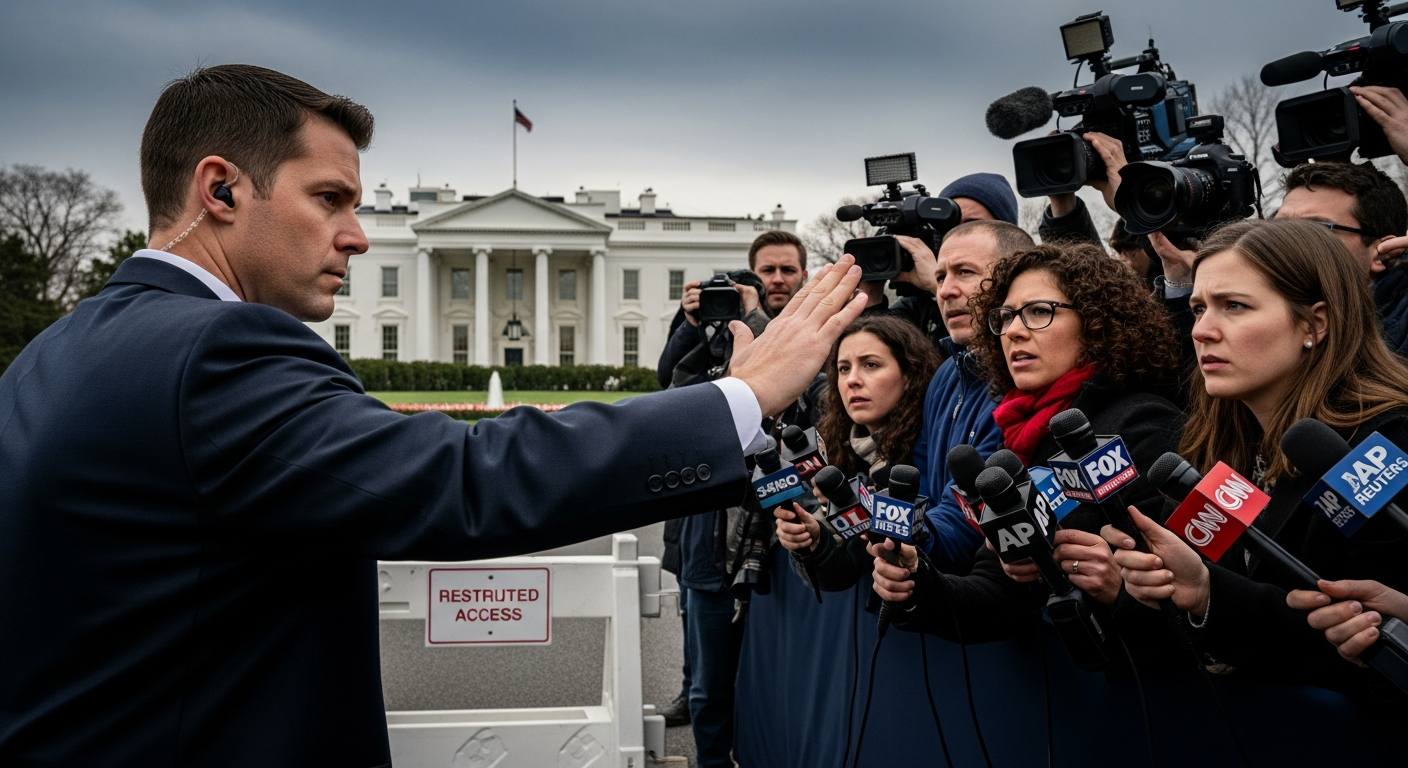
In a move raising concerns about press freedom, the White House, under the leadership of Donald Trump, has restricted journalists’ access to a portion of its media office. The decision, announced on Friday, requires reporters to obtain prior appointments before entering the section housing the office of White House Press Secretary Caroline Leavitt. This action follows a pattern of strained relations between the Trump administration and the media.
Restrictions and Justification
According to a memo from Director of Communications Stephen Cheung, the new policy aims to protect sensitive materials. The restriction means that journalists can no longer freely access a part of the media office without scheduling an appointment. The White House has not yet provided specific details about what constitutes “sensitive materials.”
Context and Controversy
This development comes after a heated exchange last week between Trump and Reuters White House correspondent Jeff Mason. The former president publicly criticized Mason for asking about transparency regarding the demolition of the Eastern Wing to make way for a new dance hall. Trump labeled Mason a “third-rate journalist” during the confrontation, which occurred in front of other reporters.
Implications for Media Access
The restrictions on media access raise questions about transparency and the free flow of information. Limiting journalists’ ability to move freely within the press office could potentially hinder their ability to gather information and hold the administration accountable. The incident involving Mason highlights the existing tensions between the White House and the press corps, adding to the debate about media access and the role of journalism in the United States.
The Broader Political Landscape
The move aligns with a broader trend of challenging media access and the role of the press. The timing, following Trump’s public criticism of a reporter, adds a layer of complexity to the situation. The White House’s rationale for the restrictions, citing the need to protect sensitive materials, will likely face scrutiny from media watchdogs and journalism organizations. The interplay between the administration and the press continues to be a central theme in U.S. politics.
Source: Annahar
About the Author