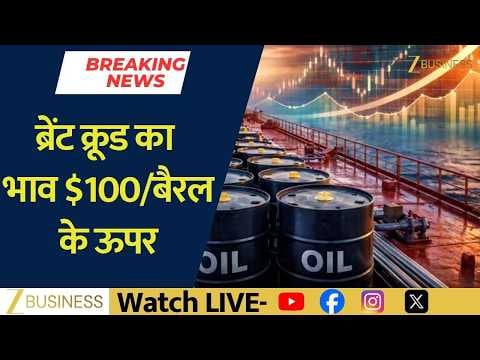
For startup founders, investors, and operators, the price of oil is more than just a number; it’s a bellwether for operational costs, investor sentiment, and global economic stability. Today, that bell is ringing an alarm. Brent crude oil has surged past the critical $100 per barrel mark, with WTI crude not far behind, trading above $91. This isn’t just a market fluctuation; it’s a direct consequence of intensifying geopolitical tensions, threatening global energy supply chains and signaling potential economic headwinds.
According to Z Business Commodity Editor Mrityunjay Kumar Jha, this sharp escalation—a nearly $30 increase since the ‘second round of war’ began—stems from a dangerous confluence of factors. Primary among them are the escalating tensions between the United States and Iran, which have renewed concerns over the pivotal Hormuz Strait. This narrow waterway is a vital choke point for global oil shipments, and any disruption there sends immediate ripples through the market.
The latest and perhaps most alarming development, however, is the series of Houthi rebel attacks on Saudi oil tankers in the Red Sea. This new front targets another critical maritime route for oil supply, compounding existing anxieties. The attacks have drawn a swift and stern warning from former President Trump to Iran, suggesting a potential for even ‘harsher action’ if Houthi aggression persists. This rapidly deteriorating situation has effectively stalled any potential for diplomatic de-escalation between the U.S. and Iran, further cementing market fears. With both the Hormuz Strait and now the Red Sea under threat, the global market faces a dual challenge to its energy arteries.
For businesses, these rising oil prices translate directly into higher operational costs, from logistics and manufacturing to energy consumption. Investors will be closely watching for inflationary pressures and potential impacts on consumer spending. If Houthi attacks continue and are met with U.S. retaliation against Iran, experts warn that oil prices could climb even higher, deepening the looming energy crisis. Conversely, a positive signal from Houthi rebels regarding a cessation of attacks, or any breakthrough in U.S.-Iran dialogue, could offer a reprieve and trigger a market correction. Until then, however, the crude oil market remains gripped by profound uncertainty, with the specter of a prolonged energy crunch casting a long shadow over the global economy.
About the Author