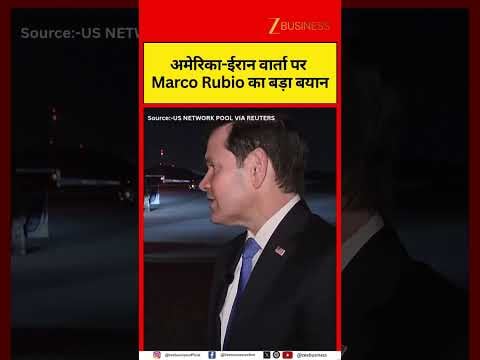
Senator Marco Rubio’s recent remarks underscore the persistent tension in U.S.-Iran relations, highlighting a complex dynamic where calls for diplomacy clash with ongoing military provocations. His statement emphasizes that while the United States maintains an open door to diplomatic solutions, Iran’s aggressive actions directly influence American responses.
According to Rubio, the U.S. has repeatedly attempted to engage Iran diplomatically and remains willing to do so should a genuine opportunity arise. He noted that Iran continues to send signals indicating a desire for talks and negotiation. However, Rubio pointedly stated, “their behavior is what we’re responding to. And their behavior is they’re launching missiles and drones against ships, including tonight.” This highlights a critical disconnect between Iran’s stated intentions and its actions on the ground, or rather, at sea.
This stance from a prominent U.S. senator reflects a broader foreign policy challenge. For startup founders and investors, the instability generated by this dynamic can significantly impact global energy markets, supply chains, and regional investment climates. Iran’s strategy of simultaneously signaling diplomacy and engaging in military provocations creates an unpredictable environment, complicating long-term strategic planning for businesses operating in or reliant on stability in the Middle East. The U.S. position, as articulated by Rubio, suggests that any substantive diplomatic progress is contingent on a verifiable de-escalation of aggressive actions by Iran, rather than mere rhetorical overtures.
The immediate implication of this ongoing situation is a continuation of heightened tensions in critical shipping lanes, potentially leading to increased insurance costs and disruptions to global trade. For businesses, this necessitates a more robust factoring of geopolitical risk into operational and investment decisions. The diplomatic stalemate, fueled by a lack of trust and conflicting actions, indicates that a breakthrough is unlikely without a significant and verifiable shift in behavior from Tehran. This persistent volatility is poised to continue influencing oil prices and regional security concerns, impacting sectors from logistics to technology development that rely on stable global conditions.
About the Author