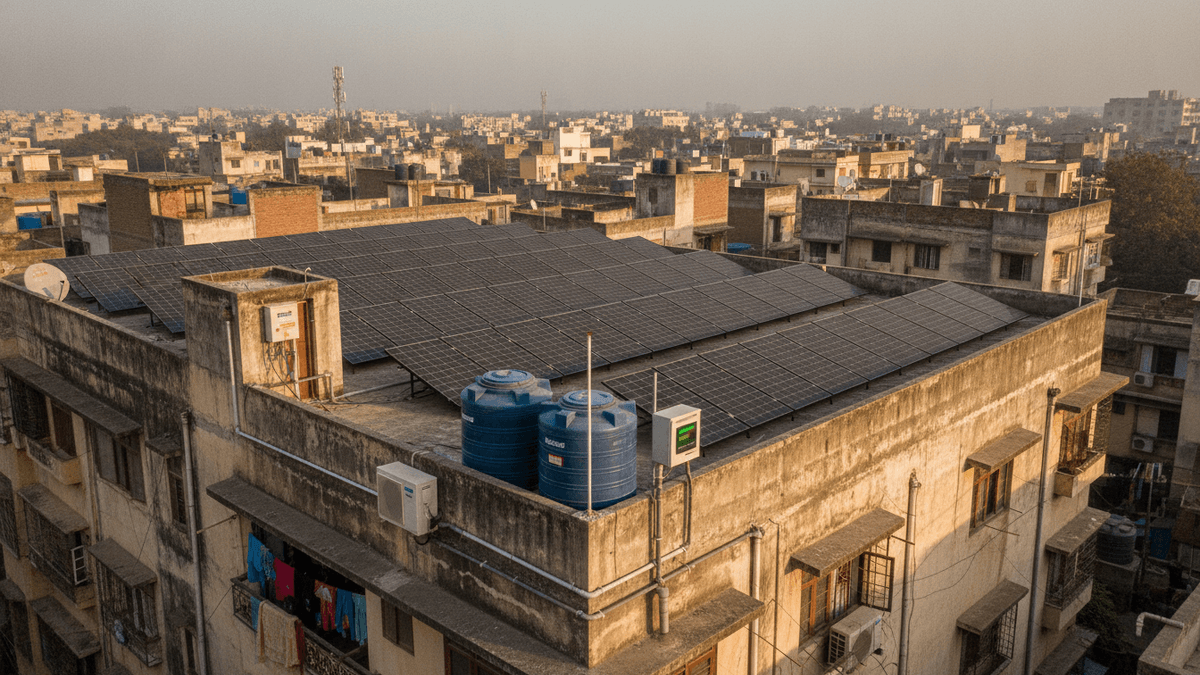
Rooftop solar panels on a residential building in Delhi, India.
The promise of a zero electricity bill, once a distant dream for many urban households, is now a tangible reality for residents in Delhi. Thanks to aggressive government subsidies and proactive initiatives from power distributors like BSES, installing rooftop solar systems has become a compelling financial and environmental proposition.
Unlocking Significant Savings with Rooftop Solar
According to BSES, a modest 1-kilowatt (kW) rooftop solar system can generate approximately four units of electricity daily. This capacity is sufficient to reduce a typical household’s power bill by 50% or more, with the potential to reach a net-zero bill through efficient consumption management. Beyond immediate savings, these systems offer a rapid return on investment, typically recovering installation costs within three to five years, while the panels continue to produce electricity for 25 years or more with minimal upkeep.
Subsidies and Financial Incentives Driving Adoption
The financial incentives are substantial, making this an attractive investment for homeowners and a burgeoning market for solar installers and financiers. Central government support, channeled through the PM Surya Ghar: Muft Bijli Yojana, offers up to Rs 78,000. This is complemented by up to Rs 30,000 from the Delhi government under the Delhi Solar Policy, bringing the total potential subsidy to an impressive Rs 1.08 lakh. For operators and investors, this dual-layer subsidy scheme significantly de-risks customer acquisition and accelerates payback periods, creating a robust demand environment.
Furthermore, the concept of net metering allows households to sell any surplus electricity generated back to the grid. This mechanism not only offsets consumption but can also generate additional income, transforming a utility expense into a potential revenue stream. The availability of easy solar loans and EMI options from banks and financial institutions further lowers the barrier to entry, expanding the addressable market beyond high-net-worth individuals.
Strategic Implications for the Energy Sector and Consumers
This push for rooftop solar in Delhi signifies a broader trend in India’s energy landscape towards decentralized power generation and greater energy independence. For startup founders in the energy tech space, this presents opportunities in installation, maintenance, financing, and smart grid integration. The focus on DCR-certified modules, approved inverters, and compliance with MNRE safety standards and DISCOM guidelines also points to the need for reliable supply chains and quality assurance in a rapidly expanding market.
The application process has been streamlined: register on the PM Surya Ghar portal, select an approved vendor, install the system, complete net metering, and begin generating. This user-friendly approach is crucial for mass adoption and indicates a maturing ecosystem for distributed renewable energy. With a 1-kW system requiring only about 100 square feet of shadow-free rooftop space, the potential for widespread implementation across urban centers like Delhi is immense, paving the way for a greener, more cost-effective energy future.
About the Author