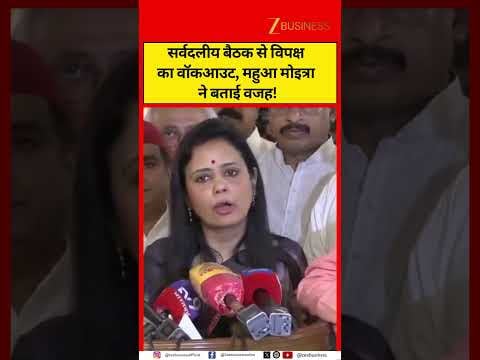
The Indian political landscape saw a significant disruption today, signaling deeper rifts within parliamentary proceedings. Several prominent opposition parties, including the Indian National Congress, Samajwadi Party, DMK, JMM, Aam Aadmi Party, National Conference, Left parties, and Shiv Sena UBT, staged a walkout from an all-party meeting. The protest was spearheaded by All India Trinamool Congress leader Mahua Moitra, who articulated the collective grievance.
Moitra stated the walkout was in direct response to the presence of “rebel 20 MPs” whose merger into a new faction has not received speaker approval, and whose disqualification petitions remain pending. She specifically highlighted that the National Congress Party (NCP), referred to as an “unrecognized party” in this context, had its strength misrepresented in the official list. Moitra questioned the validity of these 20 rebel MPs attending the meeting, emphasizing that the 91st amendment to the Constitution leaves no room for a separate block under such circumstances, challenging the Parliamentary Affairs Minister’s decision to invite them.
This incident underscores a growing challenge to established parliamentary norms and the rule of law within India’s political system. For startup founders, investors, and operators, such political instability can translate into policy uncertainty, potential delays in legislative reforms, and a less predictable business environment. The opposition’s unified stance, as articulated by Moitra, suggests a determined effort to hold the government accountable for procedural integrity. This could lead to increased scrutiny of future legislative actions and a more contentious parliamentary session. The reference to the 91st amendment highlights the legal and constitutional dimensions of this dispute, indicating that the issue extends beyond mere political theatrics.
The walkout signals a period of heightened political confrontation, potentially affecting the smooth functioning of Parliament and the passage of crucial legislation. Companies operating in India should monitor these developments closely, as a more fractious political climate can impact regulatory stability and investor confidence. The ongoing legal battles surrounding the disqualification of MPs could set precedents for future political maneuvers, further shaping the operational landscape for businesses. This event is a clear indicator that political risk remains a significant factor in the Indian market.
About the Author