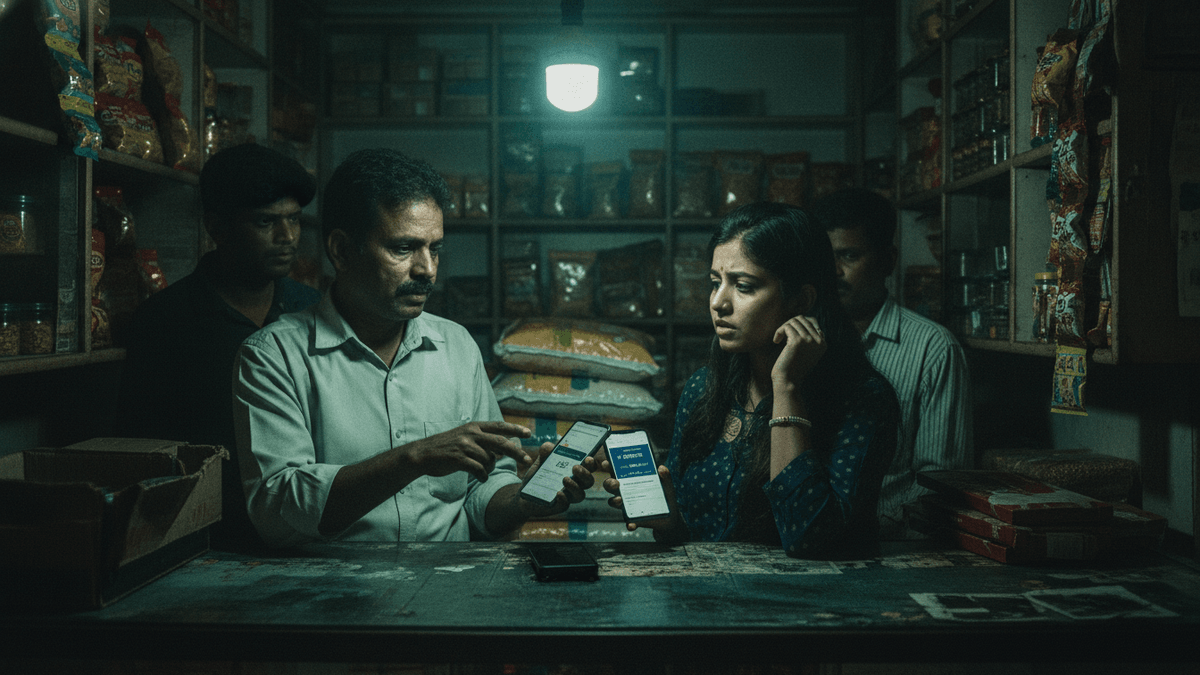
Indian shopkeeper and customer discuss payment options at a Kirana store.
India’s Unified Payments Interface (UPI) has been a global success story, but a looming debate over introducing a Merchant Discount Rate (MDR) on transactions threatens to upend its free-to-use model. Experts are sounding the alarm: implementing MDR could significantly inflate business operating costs, shrink profit margins for merchants, and ultimately dampen consumer spending, potentially stalling the very digital adoption UPI has championed.
Currently, UPI transactions are free for both consumers and merchants. This frictionless model has fueled its explosive growth, making India a leader in digital payments. However, the sustainability of this zero-MDR regime for payment service providers has long been a point of contention. The proposed MDR would levy a small percentage fee on each transaction, typically paid by the merchant to the acquiring bank or payment platform.
The primary concern isn’t just about payment company revenue, but who bears this new cost. For small merchants and the ubiquitous kirana stores—the backbone of India’s retail economy—even a modest MDR could be prohibitive. These businesses operate on thin margins, and an additional transaction cost could force them to either absorb the loss, pass it on to consumers (making digital payments less attractive), or even discourage UPI usage altogether. This would directly undermine the push for digital payments, especially for low-value transactions that form the bulk of UPI use.
Furthermore, experts emphasize UPI’s unique position as a national digital public infrastructure, akin to Aadhaar or GSTN. Its value is often measured by the economy-wide benefits it generates, not just direct profitability. Introducing MDR risks compromising the simplicity and accessibility that have been crucial to its widespread adoption, potentially tarnishing “Brand India” in the global digital payments arena.
Interestingly, many large payment companies are already diversifying their revenue streams. They are leveraging their payment platforms for customer acquisition, then cross-selling higher-margin financial services like lending, insurance, and wealth management. This raises a strategic question: is merchant-funded MDR still the most appropriate funding mechanism when these platforms have evolved beyond solely transaction-based income?
Policymakers face a delicate balancing act. While ensuring the long-term sustainability of the payments ecosystem is vital, any decision on MDR must not inadvertently increase the cost of doing business, curb consumer demand, or reverse the progress made in digital adoption. The debate must shift from merely payment company revenue models to the broader economic and strategic value of UPI. For startup founders and investors in the fintech space, this discussion highlights the evolving regulatory landscape and the need for business models that are resilient to potential policy shifts, perhaps by focusing more on value-added services rather than solely transaction fees. The ultimate priority remains fostering an environment where all stakeholders continue to invest in the ecosystem without penalizing the very users and merchants who have made UPI a success.
About the Author