Inauguration of MBA in Business Analytics program at Birla Global University
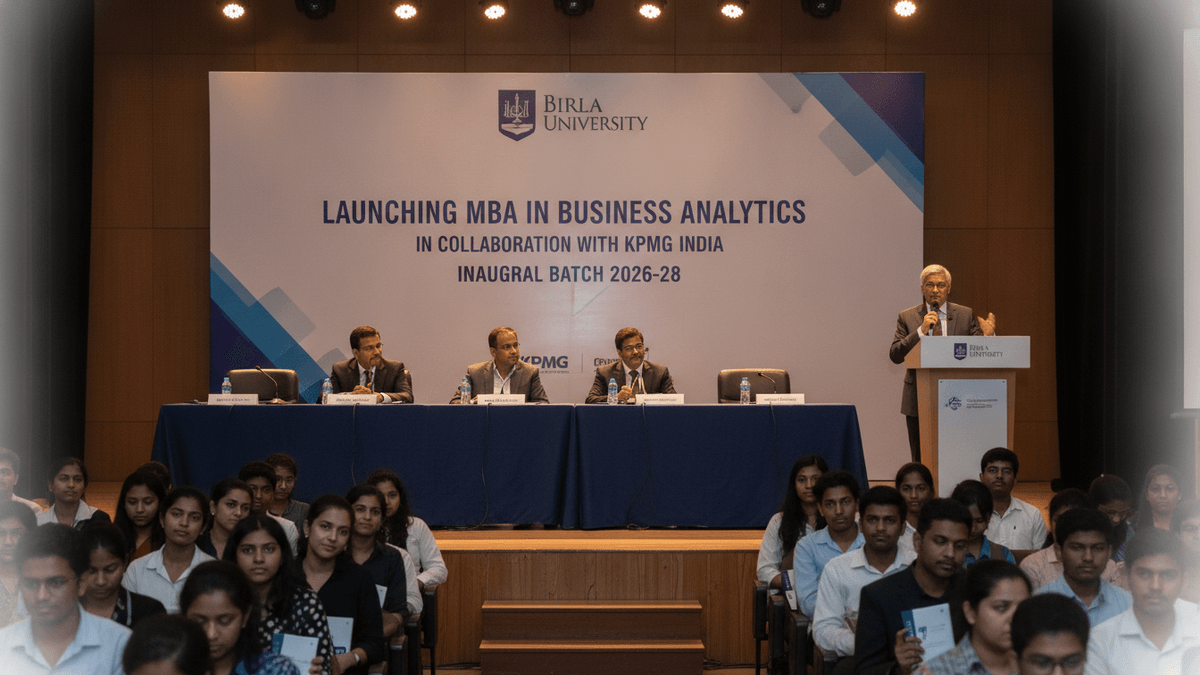
In a strategic move to address the surging demand for data expertise, Birla Global University (BGU) in Bhubaneswar has launched its first-ever MBA in Business Analytics program, co-designed and co-delivered with KPMG India. This two-year, specialized curriculum, marking a significant first for any university in Eastern India, has just inducted its inaugural batch for the 2026-28 academic session.
The collaboration signals a growing trend of academia partnering directly with industry leaders to bridge the skill gap, offering students a curriculum that is not only academically rigorous but also deeply rooted in practical, real-world applications. The induction ceremony, which also welcomed a new cohort for BGU’s flagship MBA, featured prominent figures from both sectors.
Narayanan Ramaswamy, Partner and National Leader for Education & Skill Development at KPMG India, underscored the critical importance of integrating theoretical knowledge with practical experience. He urged the new students to embrace emerging technologies and cultivate a relentless sense of curiosity—qualities highly valued in today’s dynamic business landscape. Gaurav Sharma, Senior Vice President at SolarSquare and the chief guest, reinforced this sentiment, advising students to view challenges as catalysts for continuous learning and professional evolution.
This program is designed to immerse students immediately. An intensive 15-day orientation and immersion program, commencing July 17, will introduce them to academic expectations, current industry practices, and campus life. This hands-on approach aims to equip graduates with industry-relevant skills, making them job-ready and competitive in the rapidly evolving field of business analytics.
For startup founders and operators, this initiative highlights a crucial development: the increasing formalization and specialization of data-centric education. Universities are adapting to market needs by directly integrating corporate expertise, producing a workforce better prepared for the analytical demands of modern businesses. This could streamline talent acquisition for companies seeking skilled data professionals, while also setting a new benchmark for educational institutions aiming for industry relevance.
About the Author