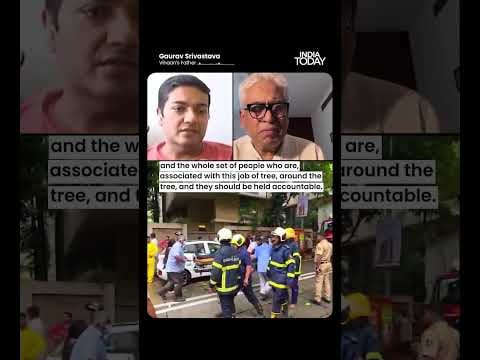
Gaurav Srivastava, the grieving father of Vihaan, has publicly expressed profound shock and a severe lack of faith in the system following an official report that seemingly issued a ‘clean chit’ in the case of his son’s death. Srivastava is now demanding a transparent re-inquiry, insisting that accountability extend beyond a mere contractor to all individuals involved in tree management and supervision.
The incident, which has garnered significant public attention, saw an initial inquiry conclude in a manner that Srivastava finds deeply unsatisfactory. “The way it was given a clean chit and the conclusion of those reports. It’s a complete shocking for us,” Srivastava stated, as reported by India Today. His primary concern is that a superficial blame game will prevent genuine change, leading to similar tragedies in the future. He believes that the current findings fail to address the systemic failures that led to the incident.
Srivastava’s demand is clear: a fresh inquiry led by independent and expert persons. He argues that responsibility must be shared by all parties involved, from those planning the tree management to those supervising its execution, not just the contractor. This stance highlights a critical issue for businesses operating in public infrastructure and urban development: the intricate web of accountability. For startup founders and operators involved in contracting with government or public bodies, this case underscores the imperative of robust internal oversight, clear contractual obligations, and an understanding of the broader stakeholder expectations regarding public safety and transparency.
The implications of this demand are significant. Should a re-inquiry be initiated and conducted with the transparency Srivastava seeks, it could set a new precedent for accountability in public works projects. This case serves as a stark reminder that in an increasingly scrutinized environment, negligence at any level of a project, even seemingly minor, can have catastrophic consequences and lead to intense public and media pressure. Companies and government entities alike must recognize that trust is built on demonstrated responsibility, and failure to address public concerns adequately can severely erode credibility and future operational latitude.
About the Author