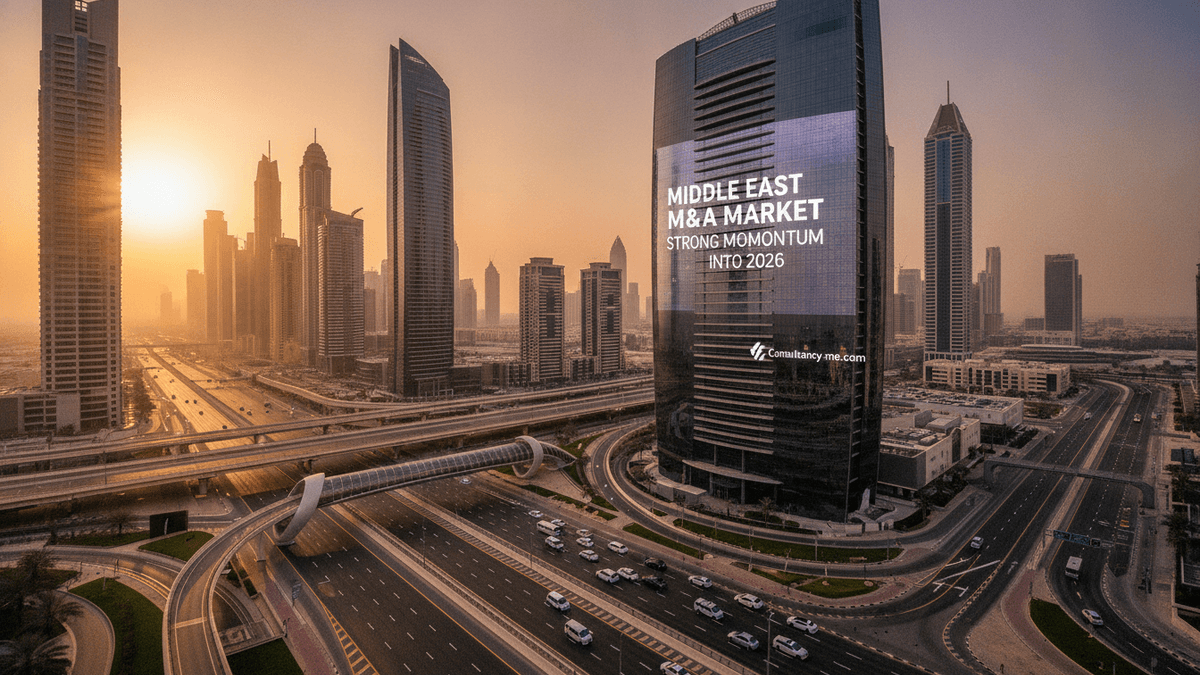
Dubai cityscape at sunset with highway and skyscraper displaying "Middle East M&A Market"
The Middle East’s mergers and acquisitions (M&A) landscape is entering 2026 with significant momentum, signaling a robust period for strategic investments and corporate restructuring across the region. This positive outlook, highlighted by Consultancy-me.com, reflects a dynamic market poised for sustained activity, drawing attention from both regional and international players.
This anticipated surge is largely fueled by ambitious national visions for economic diversification, particularly in major Gulf economies like Saudi Arabia and the UAE. Governments are actively promoting private sector growth, fostering innovation, and attracting foreign direct investment, creating fertile ground for M&A activity. Key sectors such as technology, renewable energy, logistics, and healthcare are seeing increased interest, driven by population growth, digital transformation, and sustainability mandates.
For startup founders and investors, this environment presents both opportunities and challenges. The strong M&A appetite can offer attractive exit strategies for burgeoning companies and provide capital for expansion, but it also intensifies competition for desirable assets. Strategic insight will be crucial for navigating a market characterized by sophisticated deal-making and evolving regulatory frameworks. This trend underscores a broader shift towards a more mature and integrated regional economy, where consolidation and strategic partnerships are becoming essential for growth and market leadership.
Looking ahead, the sustained momentum suggests a period of continued transformation for the Middle East’s business ecosystem. Companies seeking to capitalize on this growth will need to remain agile, identify synergistic opportunities, and adapt to rapidly changing market dynamics. The region is solidifying its position as a global hub for investment, with M&A serving as a key driver of its economic evolution into the mid-2020s.
About the Author