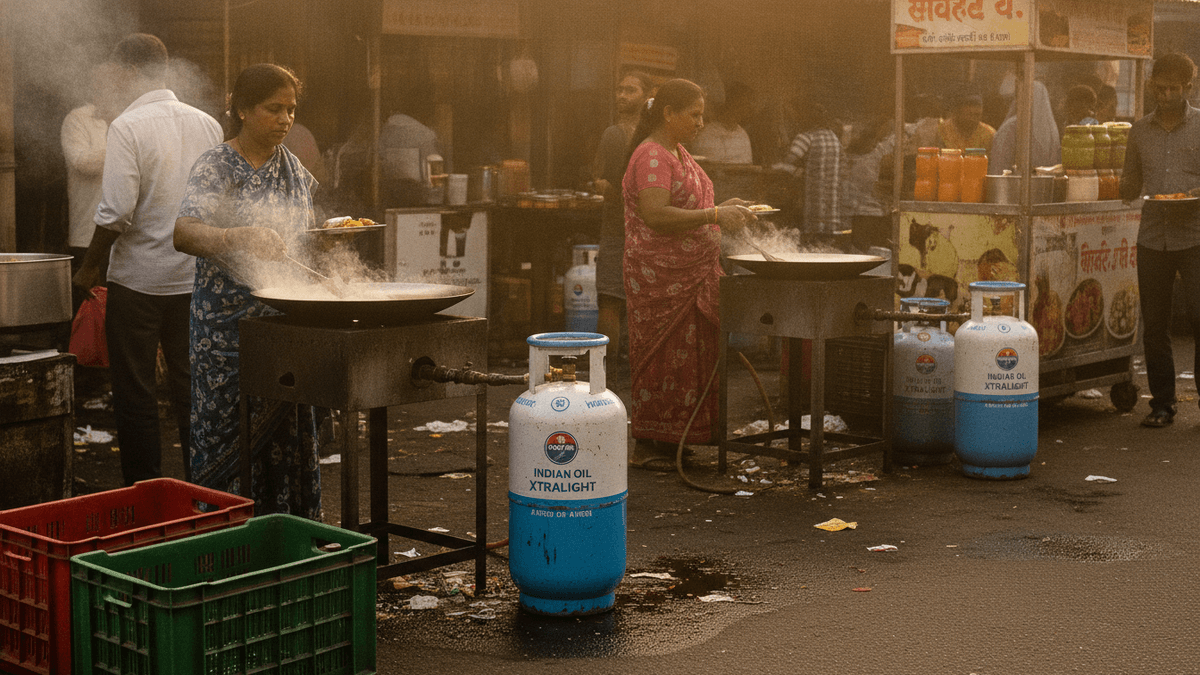
Street vendors cooking at dawn using Indian Oil Xtralight LPG cylinders
India’s state-run Oil Marketing Companies (OMCs) are poised to significantly expand their reach by selling lightweight 10-kg LPG cylinders beyond traditional domestic use, potentially at commercial rates. This strategic shift, currently under discussion, aims to tap into a vast, underserved market, from migrant workers and students to street vendors and small food kiosks, reshaping how millions access cooking fuel.
The move is not entirely new territory for OMCs. Companies like IndianOil with its Indane Xtralight, HPCL’s HP Gas Ojas, and BPCL’s Bharatgas Lite have already introduced these composite cylinders to a limited number of domestic users. However, the proposed expansion into the commercial segment, where LPG is currently 133 percent more expensive than domestic gas, marks a pivotal moment. OMCs currently cater to commercial users with larger 19 kg, 5 kg, and 2 kg steel cylinders.
This initiative leverages the inherent advantages of the 10-kg composite cylinders. Made of high-density polyethylene (HDPE), they are approximately 50 percent lighter than their traditional steel counterparts, making transportation and handling significantly easier—a boon for users living in multi-story buildings or operating mobile food businesses. Crucially, their translucent body allows users to visually monitor gas levels, simplifying refill planning and reducing unexpected outages.
Strategically, this expansion could unlock new revenue streams for OMCs while addressing a critical need for flexible, smaller-volume LPG options. Migrant workers, tenants, and students often struggle with the upfront cost and logistical challenges of larger domestic cylinders, or face restrictions in obtaining connections. Similarly, small businesses like cafes and street food vendors require a manageable, reliable fuel source without the bulk of larger commercial cylinders.
The decision to price these at commercial rates reflects a pragmatic approach by OMCs to expand market share profitably. While potentially higher than subsidized domestic rates, the convenience and accessibility of these smaller, lighter cylinders could justify the cost for the target demographic. This market formalization could also reduce reliance on informal or less safe fuel sources, contributing to broader energy access goals. As discussions progress, this initiative could redefine the landscape of LPG distribution in India, fostering greater inclusivity and efficiency in energy consumption.
About the Author